How to succeed at ski touring
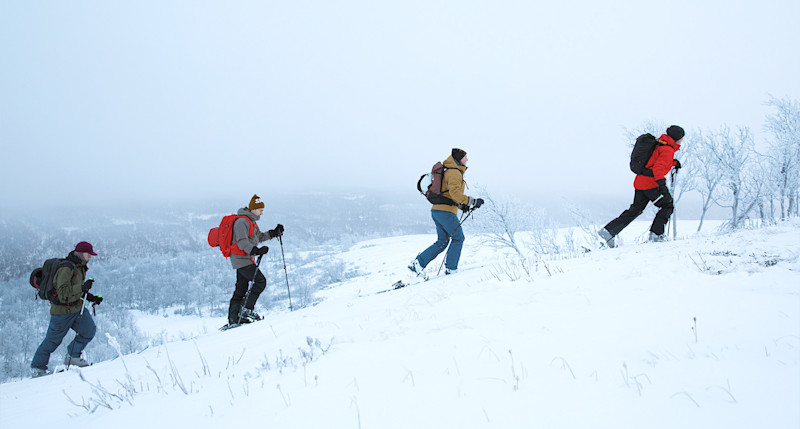
Ski touring means ascending the mountain with the help of skin
attached under your skis. Once you reach the top, you ski back down! The skins give you grip on the uphill without slipping. Ski touring is a great way to enjoy mountain views at your own pace. For this, you need touring skis designed for both uphill and downhill performance.
Are you focusing on quick ascents and fast descents, or planning a longer uphill adventure? We’ll help you find the right skis and equipment for a successful tour, both up and down the mountain!

Things to keep in mind when you go ski touring
- Ski touring is usually divided into three categories - classic ski touring, free touring and ski mountaineering. Which skis you should choose depends on the type of ski touring you are doing.
- There are two different types of touring bindings, tech bindings and frame bindings. Tech bindings are the most popular variant and are suitable for those who are into classic ski touring. Frame bindings are slightly heavier but have better safety, which is suitable for those who ride Free touring.
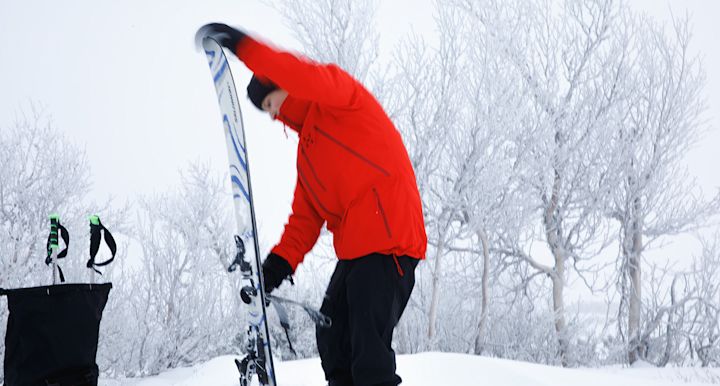
- Skins are a must for ski touring! These are attached to the underside of your skis using a sticky back, with the aim of improving your grip.
- Avalanche safety gear is extra important to pack when ski touring. Basic avalanche safety gear includes an avalanche transceiver, avalanche probe and shovel.
Different types of touring skis
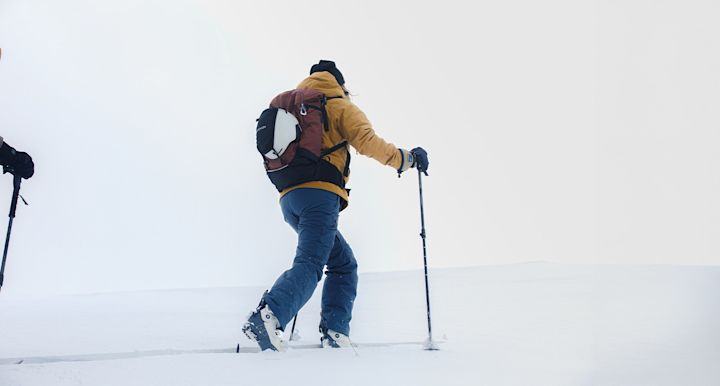
Touring skis are specially developed to work just as well uphill with skins underneath, as on the piste or off-piste on the way down the mountain. These skis are usually divided into three different categories. Classic ski touring, ski mountaineering or free touring. Which way you choose plays a big role when it comes to choosing skis and equipment.
Classic ski touring
Classic summit touring is suitable for those who want to get up at their own pace with a focus on views and the experience uphill. Maybe you want to stop on the way and have a coffee, and then reach the top and go down into powder snow. These skis should be versatile and have a waist of 86-88 mm. The recommended length of the skis is 5-10 cm shorter than your total body length. Slightly shorter skis make you feel lighter, allow for kick turns on the way up and are generally easy to handle.
Free touring
Free touring is optimal for those who have a strong focus on the descent and exploring new areas off-piste. Classic touring skis have a low weight that partly pays for the ski's benefits when it comes to downhill skiing. Free touring is therefore suitable for those who value good conditions for their trip downhill, rather than uphill. Here you should focus on boots with walking mode and a pair of wider skis with a waist measurement of 95-105 mm. The skis are recommended to be the same length as your body height. This length of skis improves stability and your float down the slopes.
Ski mountaineering
Ski mountaineering and speed touring are suitable for those who want to get up the mountain as fast as possible, and then go down and take on the next mountain. Maybe you're even thinking about entering competitions? For this type of touring, light skis and equipment are required. We recommend ultralight skis with a waist of 65-80 mm. These should be about 10 cm shortened than your total body length. Let the narrowest skis be for competitions, while a waist of around 75 mm will be more versatile.
Bindings for the summit tour
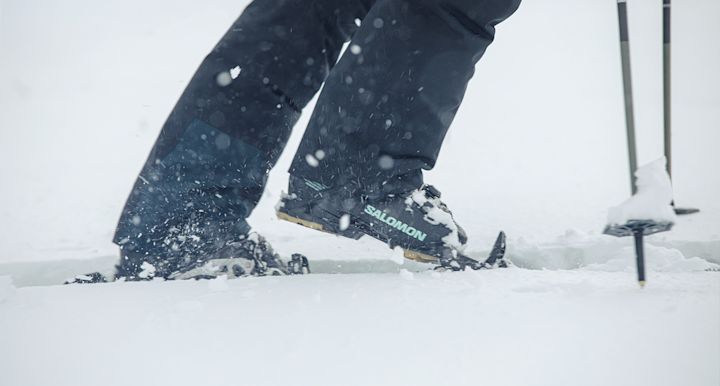
What distinguishes touring bindings is that they have the ability to detach the heel so that you can set what is called walking mode, which makes it easier to get up the mountain. For ski touring where you walk for a long time, we recommend a lighter binding.
There are two different types of touring bindings, tech bindings and frame bindings. Tech bindings are the most popular variant and also the most lightweight. It is well suited for those who devote themselves to classic ski touring. Frame bindings are slightly heavier but have better safety, which is suitable for those who ride Free touring.
It is important that you make sure that your ski boots fit well with the binding that you choose. Today, there are also bindings that combine the effective step of a tech binding with the release mechanism of the alpine bindings.
Skins for ski touring
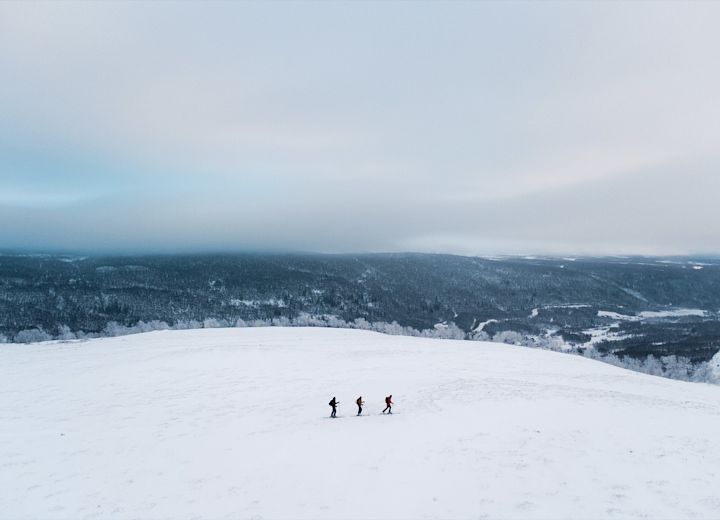
A skin is a must for those who are going on ski touring. It attaches to the underside of your skis using a sticky back, with the aim of improving your grip. Some skins are made of synthetic material. Nylon is the most common material that is ideal for beginners. For the slightly more experienced skier, a mohair skin, or a combination of mohair and synthetics, is recommended. Mohair usually provides a better glide, while synthetic skins tend to be more durable.
It is important that you take good care of your skins so that they will last for as many rides as possible. Gently fold them together when you're done to avoid getting dirt on the glue. Also, be sure to dry them at room temperature when you get home from the tour. This means that the glue adheres better to the ski next time.
How should I dress for the ski tour?
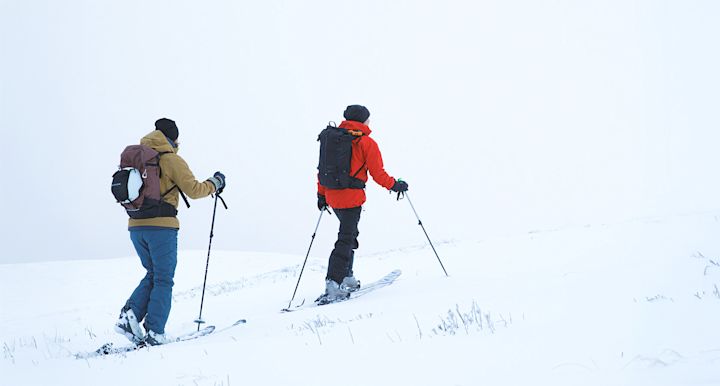
The most important thing to keep in mind when dressing for ski touring is that you should give yourself the opportunity to regulate the temperature by putting on or taking off garments. The layer-on-layer method is a good recommendation. Up the mountain as you walk, you tend to get hot, while once up the mountain and downhill, a little more clothing is required. Merino wool base layers are a big favourite because the properties of the wool keep you warm when you're cold and transport moisture when you get hot and sweaty. A good mid-layer jacket plus a reinforcement jacket is a winning concept. You can keep the reinforcement jacket in your backpack when you get up, and then take it out when it gets a little colder.
When it comes to mittens, it is advantageous to have a pair of thin ones on the way up and a pair of thicker ones on the way down. An alternative is a pair of mittens with removable lining. A buff is nice to have around your neck and you can pull it up over your face if the wind blows cold.
What gear should I pack for the ski tour?
Safety is the be-all and end-all when it comes to ski touring and avalanche equipment becomes especially important. We have listed a few things we think are a must to have in your backpack, to make your trip go as smoothly as possible and in case something unexpected happens.
Avalanche safety gear
Basic avalanche safety gear includes an avalanche transceiver, avalanche probe and shovel. At Outnorth, you will find these products separately, or as a complete avalanche set with all components. Be sure to always check that the batteries are working before heading out. Hint! With all electrical devices powered by regular batteries, it is recommended to remove them when the device is not to be used for a long period of time, such as between seasons. This is to avoid the risk of the batteries leaking battery acid and destroying the device.
Ski backpack or avalanche backpack
Choose a ski backpack or avalanche backpack with multiple openings so that you can quickly access your gear. We also recommend hanging brackets so you can hang your gloves on your backpack, for example. That way you don't have to stop and open up the backpack every time you need them.
Poles
When choosing poles, it is good to keep in mind that these should be adjustable in length. In this way, you can adjust the desired length of the poles depending on where on the mountain you are.
Helmet
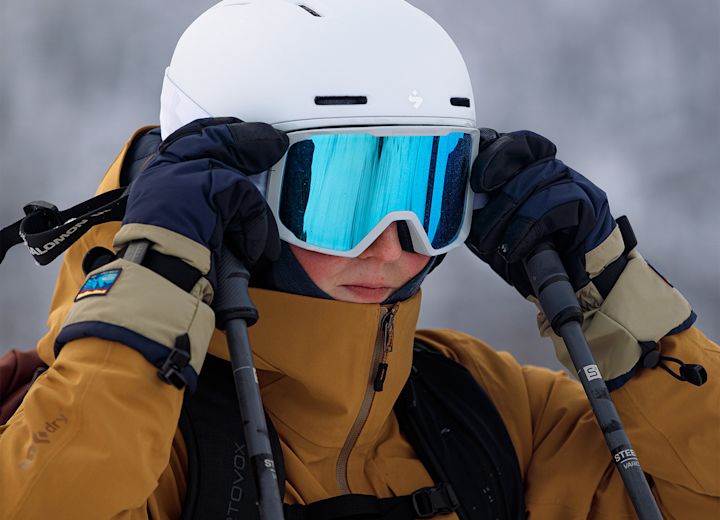
The helmet is good to have as extra safety in case of avalanche risk, but also when you are going down the mountain. Wearing the helmet on the way up can get hot, so a helmet without lining may be preferable. Instead, add a thinner hat.
Sunglasses or goggles
A good pair of sunglasses is comfortable to wear on the way up to protect your eyes. If the weather is very bad, goggles are recommended for extra protection, but in normal weather conditions these can become too hot and fogged up. It is important to have good visibility so that you can quickly perceive your surroundings!
Map and compass
Although it works great to use GPS on your phone as an aid, there are some advantages to packing a traditional map and compass on the summit tour. Maybe the electronics are malfunctioning, there is no connection on the way up the mountain or is it simply too cold to take your gloves on and off every time you look at the map on your phone.
First aid kit
A small first aid kit is always recommended when you are going on an adventure! We recommend that it contains blister plasters, a tape you can temporarily repair equipment with if something goes wrong and a safety whistle.
Headlamp
A headlamp is a very good tool to pack if the trip would drag on and it starts to get dark.
Hopefully, you have gathered some important information that will make it easier and more fun to go ski touring. We at Outnorth wish you the best of luck – and make sure to enjoy the view!