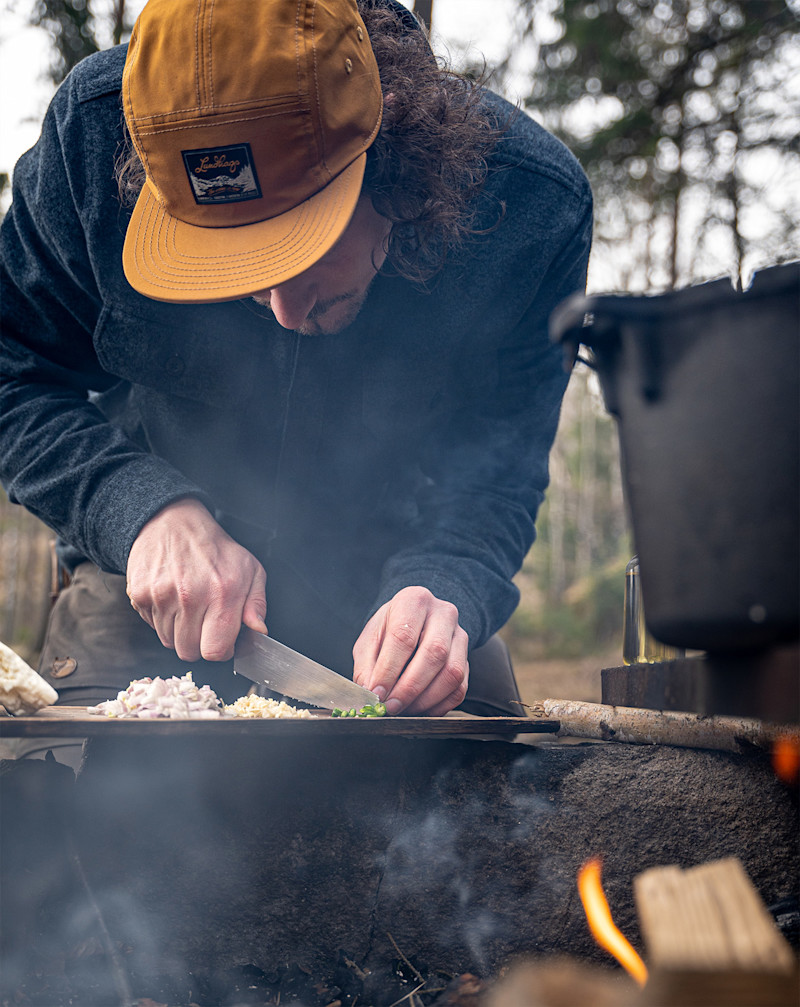
Outdoor cooking
The freedom to cook anywhere is wonderful – from snowy mountain tops, to a lake in summer, a stove in a winter tent to the flames of a fire. But how do you cook something outside?
There are many ways to cook your favorite meal when you're out on an adventure with many different outdoor kitchens and fuels. In this guide, we summarize some advice for outdoor cooking and describe different outdoor kitchens as well as their pros and cons.
Quick guide: the essentials
- Start simple. Get to know your stove before you head out into the woods.
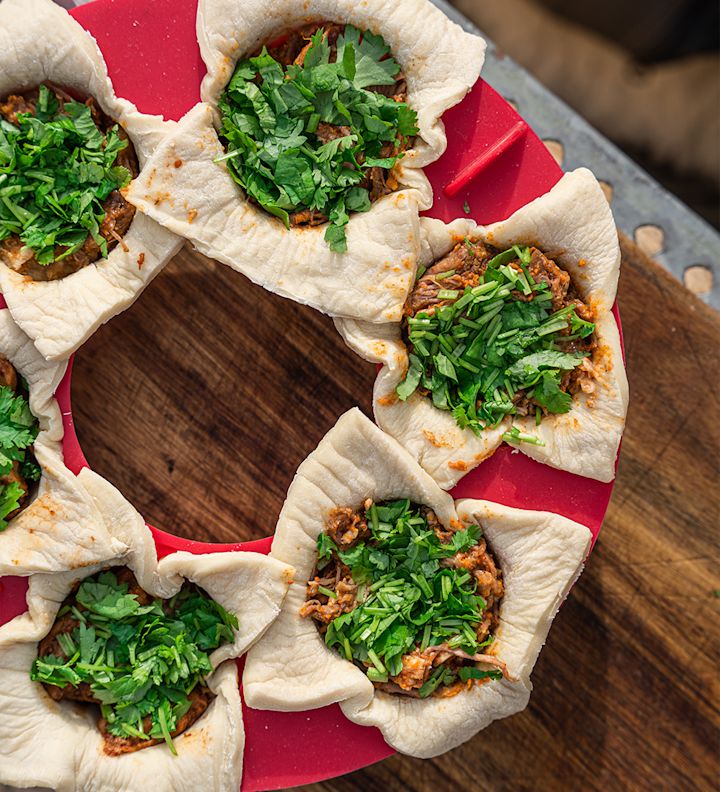
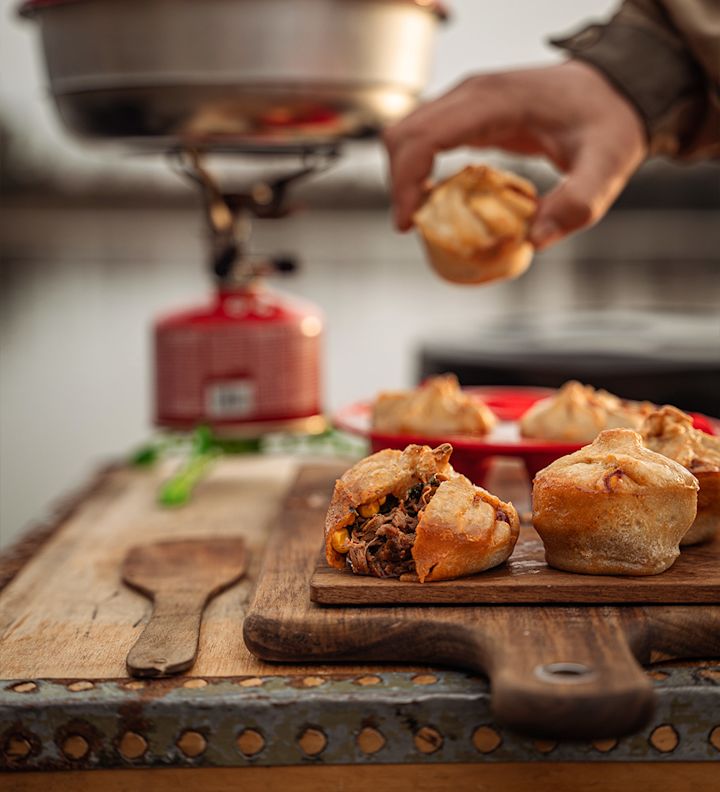
- Choose a recipe designed to be cooked outdoors – you'll find plenty on our website.
- Prep at home. Chop, weigh and season in advance to save time and weight in your pack.
- Gas and alcohol stoves are your saviour during fire bans, in the rain and when you want to hike a while before you cook.
- Cast iron is king over embers: griddle, pot and sandwich iron.
- Camping stoves give you several burners and a large cooking surface – perfect for basecamp, road trips and more ambitious dishes.
- An open fire gives the most flavour and atmosphere, but requires cast iron (or a grilling skewer), firewood and that fires are permitted.
- Don't forget: a lighter, water and a rubbish bag.
How to get started
Start simple
Ten spice jars and five ingredients add up to a heavy pack. Cook something simple the first few times, close to home – then you can fetch whatever you forgot.
A basic kit goes a long way:
- Stove and fuel – or firewood.
- Lighter
- Ingredients for your meal
- Water
- Mug or kuksa, plate, cutlery
- Sit pad
- Rubbish bag
Prep at home
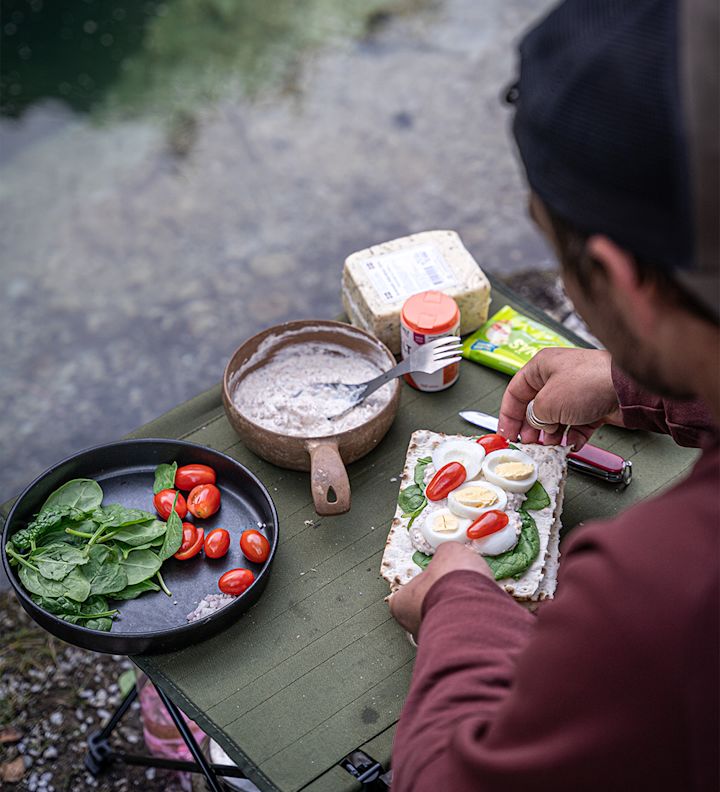
The more ingredients, the more prep. Do yourself a favour and sort out everything you can at home.
- Bring pre-chopped ingredients in food containers
- Mix your spices in advance
- Eat straight from the container – then you can skip the extra plates
- Read the recipe carefully and make a packing list
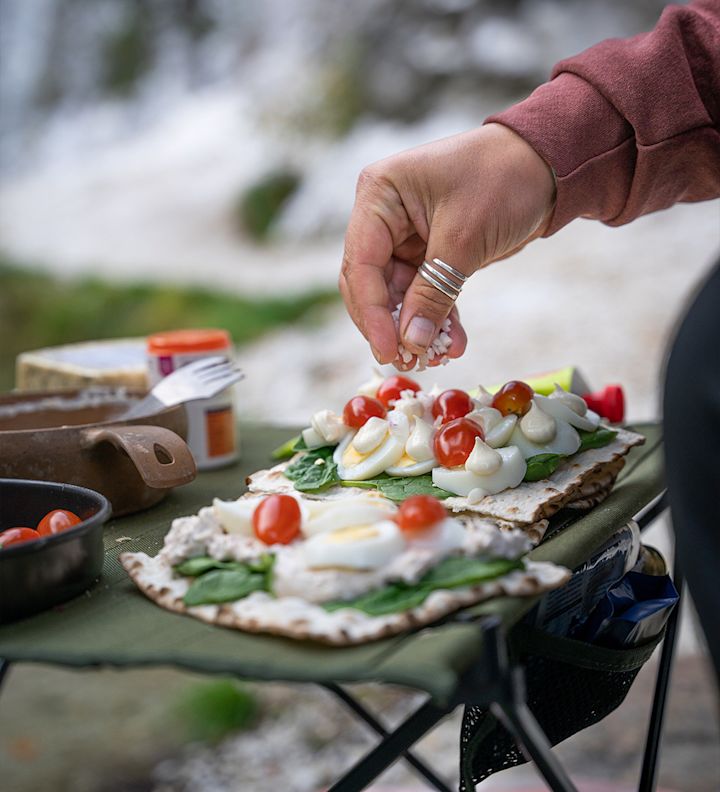
Different outdoor stoves – pros and cons
Gas stove
The gas stove is the most widely used outdoor stove: a burner that mounts onto the gas canister, plus a support for your pot. Small, fast and efficient. Many models pack away with both the burner and the canister inside the pot.
Suits you if you: hike a while before cooking or want boiling water in no time.
Keep in mind: in sub-zero temperatures you'll need a winter gas blend, and you can't see how much gas is left.
Alcohol stove
A classic many of us remember from childhood. The flame is gentler and kinder for frying, the fuel is cheap and usually easy to find. It also works in several degrees of frost.
Suits you if you: want a quiet, reliable and inexpensive stove – and aren't in a hurry.
Keep in mind: it needs refilling, takes longer to heat up, and the burner has to cool down before you pack it away.
Multi-fuel stove
Also called an expedition stove, it runs on almost anything: petrol, diesel, paraffin, aviation fuel – and gas with an adapter. It's tough and fuel-flexible, but perhaps not the first choice if you mainly want to head into the woods and cook something tasty.
Suits you if you: travel far and stay out for a long time.
Keep in mind: there's more to learn, and cookware is rarely included.
Camping stove
A larger gas stove with two or more burners, or alternatively a wood-fired stove. It offers more functions and an experience closer to your cooker at home.
Suits you if you: have a basecamp, are on a road trip or cook for the whole family.
Keep in mind: it's big, heavy and requires several gas canisters, firewood or charcoal.
Open fire
Not a stove – but perhaps the finest way to cook. The smoke adds flavour, and the whole ritual around the fire is half the experience. Use a griddle, frying pan, pot or sandwich iron in cast iron: it spreads the heat evenly and handles the fire's ups and downs.
Suits you if you: have the time and space and see cooking as the whole point of the trip.
Keep in mind: cast iron is heavy, and you often need to bring your own firewood. Always check that fires are permitted – and put it out properly.
Comparison: which outdoor stove should you choose?
| Pros | Cons | |
|---|---|---|
| Gas burner |
|
|
| Spirit burner |
|
|
| Multifuel stove |
|
|
| Camping stove |
|
|
| Open fire |
|
|
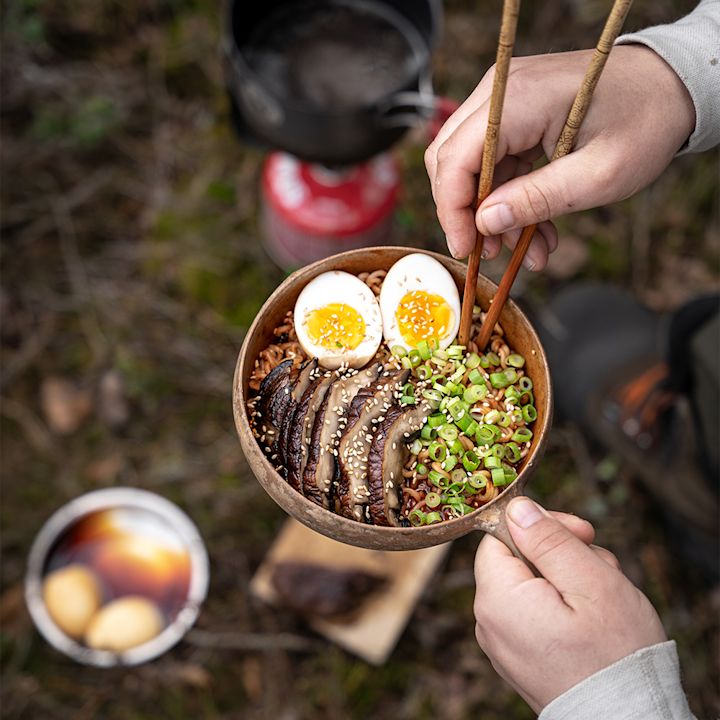
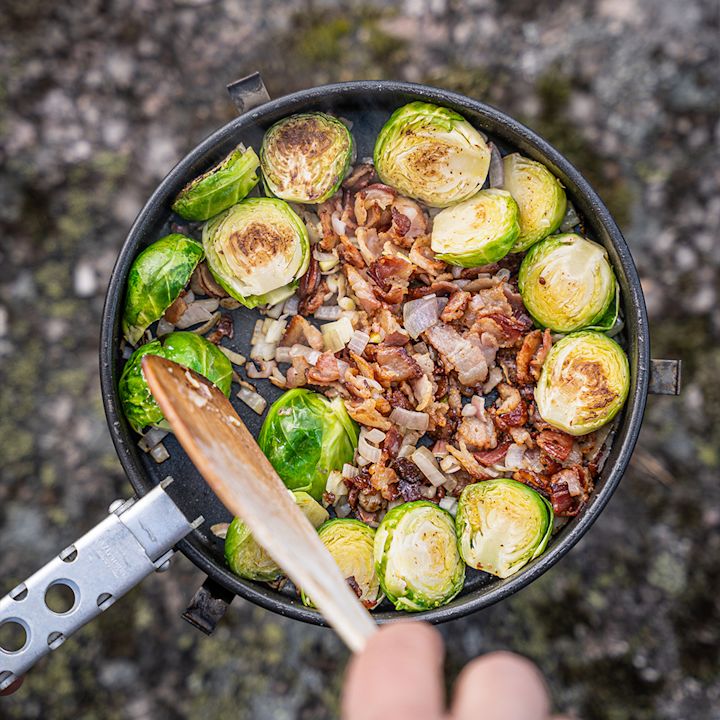
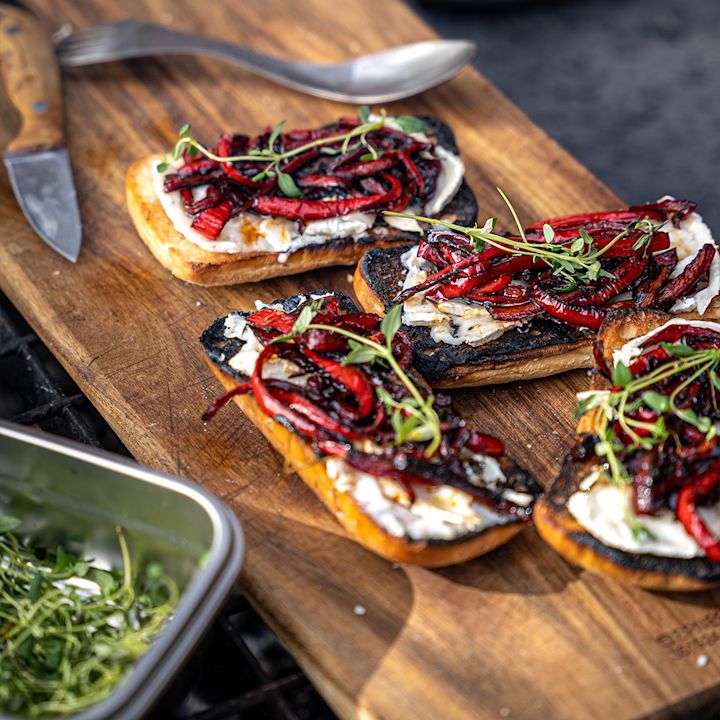
Frequently asked questions about cooking outdoors
Which outdoor stove is best for beginners?
A gas stove. It lights in seconds, is quick to learn and requires no preparation. If you'd rather fry than boil, an alcohol stove is a good alternative because the flame is gentler.
Do gas stoves work in sub-zero temperatures?
Do gas stoves work in sub-zero temperatures?
Why cast iron and not something lighter?
Cast iron spreads the heat evenly and handles the fire's ups and downs without warping. The downside is the weight, so save it for day trips, basecamp and car-based adventures.
What's the easiest thing to cook the first time?
Something with few ingredients or a ready-made stew that just needs heating. Or a tasty sandwich in a sandwich iron over the embers.
What do I do with the rubbish?
Everything comes home with you – including food scraps and coffee grounds. Always keep a rubbish bag in your pack.


